None of that is a reporting problem. It is a measurement problem.
The numbers you run on were typed in by someone. Almost none were measured at the asset, the counterparty, or the market.
Solve it and you take market share from every competitor still guessing.
Release the capital sitting in safety stock.
Invoice everything you delivered.
Stop discounting for counterparties you cannot check.
Bid the number you can prove.
Precision pays on both sides of the ledger. It stops what was quietly draining, and it lets you commit harder than anyone who still has to guess.
The numbers you run on were typed in by someone. Almost none were measured at the asset, the counterparty, or the market.

Provenance. You can point at where it came from, as it was found.
A timestamp. Each value carries the moment it applies to. That is what turns separate readings into direction and rate of change.
A test it passed. The value is the output of a test that could have rejected it, and that test was run. Anything no test could reject has not been verified.
A number with all three is ready to act on. The rest get checked by hand again, which is where your speed goes.

Six layers between a raw source and a claim. Each is auditable on its own, and none may repair a failure in the one beneath it.
Reachability is treated as a time-varying property of each source, probed and versioned on every cycle rather than assumed. Request rate is bounded per host, holding collection inside the capacity each source is provisioned for. Raw payloads are retained and checksummed, so any extraction can be re-run against the original bytes rather than against an earlier reading of them.
Every collection run is a record in its own right, ending in one of four states: complete, partial, failed, not attempted. A gap in the data and a gap in the collection are different conditions, and nothing downstream is allowed to treat them as one.
Extraction runs before any filter. Every value is stored together with the exact text it was read from, so a disputed figure resolves to its source wording rather than to an argument. Filters sit strictly downstream, which keeps a count of what they removed.
Records arrive under inconsistent surface forms: variant spellings, multiple scripts, and identifiers that disagree between registers. Identity is resolved on adjudicated evidence, never on lexical similarity. Every merge and split is persisted with the evidence that justified it and is reversible.
Arrival volume is dominated by restatement: the same state asserted again under a different surface form. Each incoming assertion is evaluated against current ledger state, and a transition is written only where that state actually moves. Collapsing restatement into transition inflates the signal rate without adding information.
The only layer permitted to state a conclusion. Every layer before it does nothing but record what was observed and what was discarded. That record is what the conclusion rests on when it is challenged.
Every value carries its source, the time it was retrieved, and the exact text it was read from.
Nothing observed and nothing changed are different results, at every layer.
Everything rejected is kept. Without it, precision can be reported and recall cannot.
No claim without an instrument capable of contradicting it.
We run those attempts on a schedule, against our own output, before anything reaches you.
Our ground truth gets blind-audited. On one label library, twenty-seven percent of it survived. Every downstream number was recomputed.
A significant result is reviewed harder than a null one. A finding at p=0.0009 proved to be an artefact of a comparison window that had quietly widened. We reported it as an artefact.
Identity is never matched on substring. Two unrelated companies can share a run of characters across Arabic and English. Every identity is adjudicated against evidence, and the decision is kept.

In one national market we returned twice the companies the official register holds, each with its evidence, refreshed on a schedule.

Ownership through offshore layers, sanctions, adverse media in the languages that carry it, documents tested against the standards they claim. In an hour.
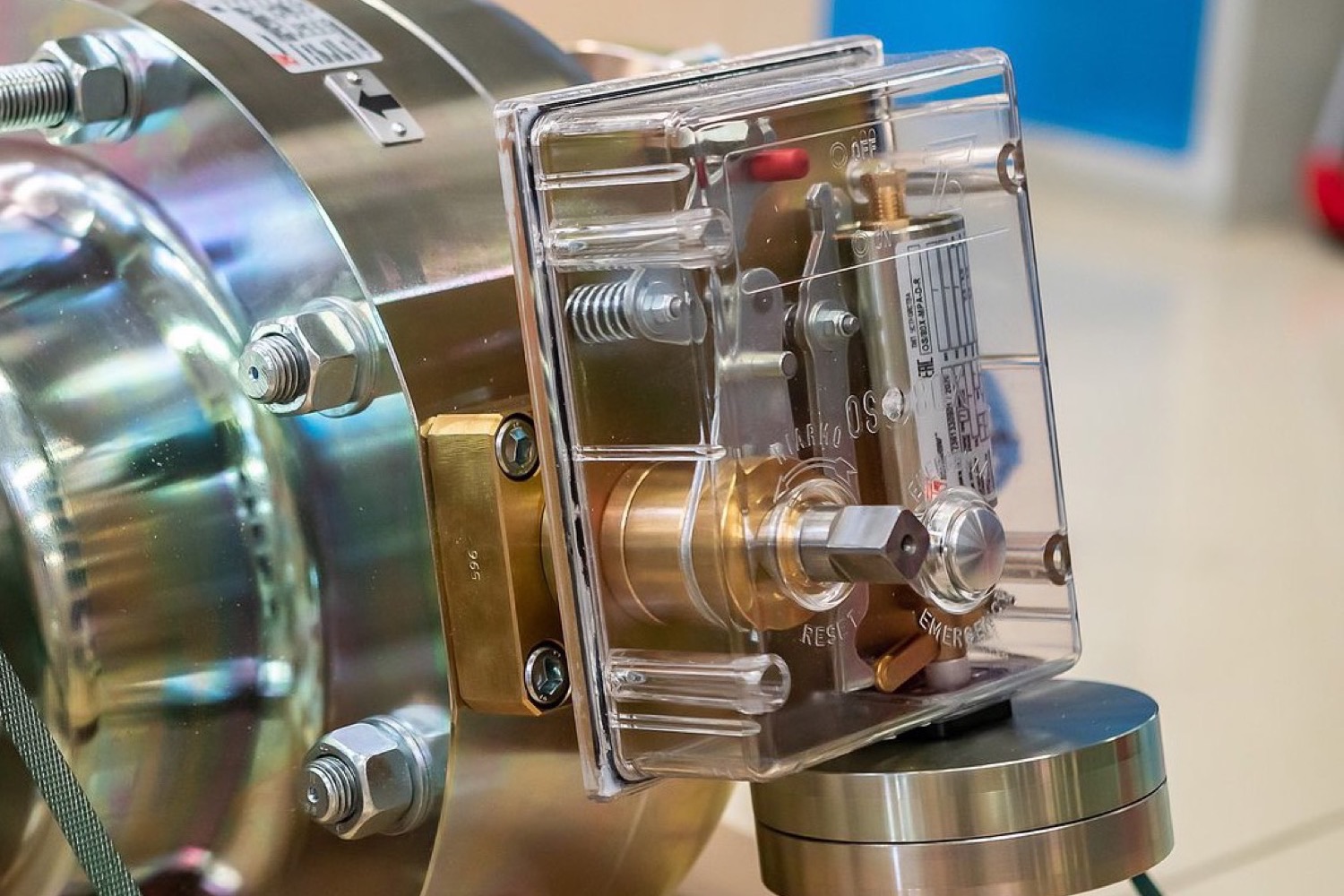
Downhole tooling qualified at 200 °C and 10,000 psi. Ultrasonic and vision measurement. Rigs built because nothing else would do it.
Most operations have never had a live view of themselves. That is where we start, and it is usually the first thing a client says changed.
A four-week pilot. Your operation and your market, live and continuous, assembled from sources you were not reading.
One number worth moving, chosen once you can finally see the candidates. We then build what makes that number certain, and move it.
Running in your environment, on your data. Hardware too, where the loop needs an instrument.
Measured against the number we named. We would rather be paid on that than on hours.
For two decades Alpha Gaia Capital has advised oil and gas, water, power, renewables and industrial clients: strategy, market research, business development and the financial case behind it. That practice continues. It decides which number is worth building for.
We begin in the Gulf because that is where we are trusted. The work travels with the asset, and so do we.
Decisions under incomplete information, as a career and as a discipline.